AI/ML researcher · data scientist · software engineer
Software engineering graduate building a research career in computer vision, self-supervised learning, and explainable AI, with three manuscripts in revision or under review and an original, published dataset. Alongside this research, I've built production ML systems in industry, including an automated air-quality forecasting pipeline and a churn-prediction model that measurably improved customer retention. I'm currently a research assistant at the University of Sargodha, working toward a Master's in AI, machine learning, or data science.
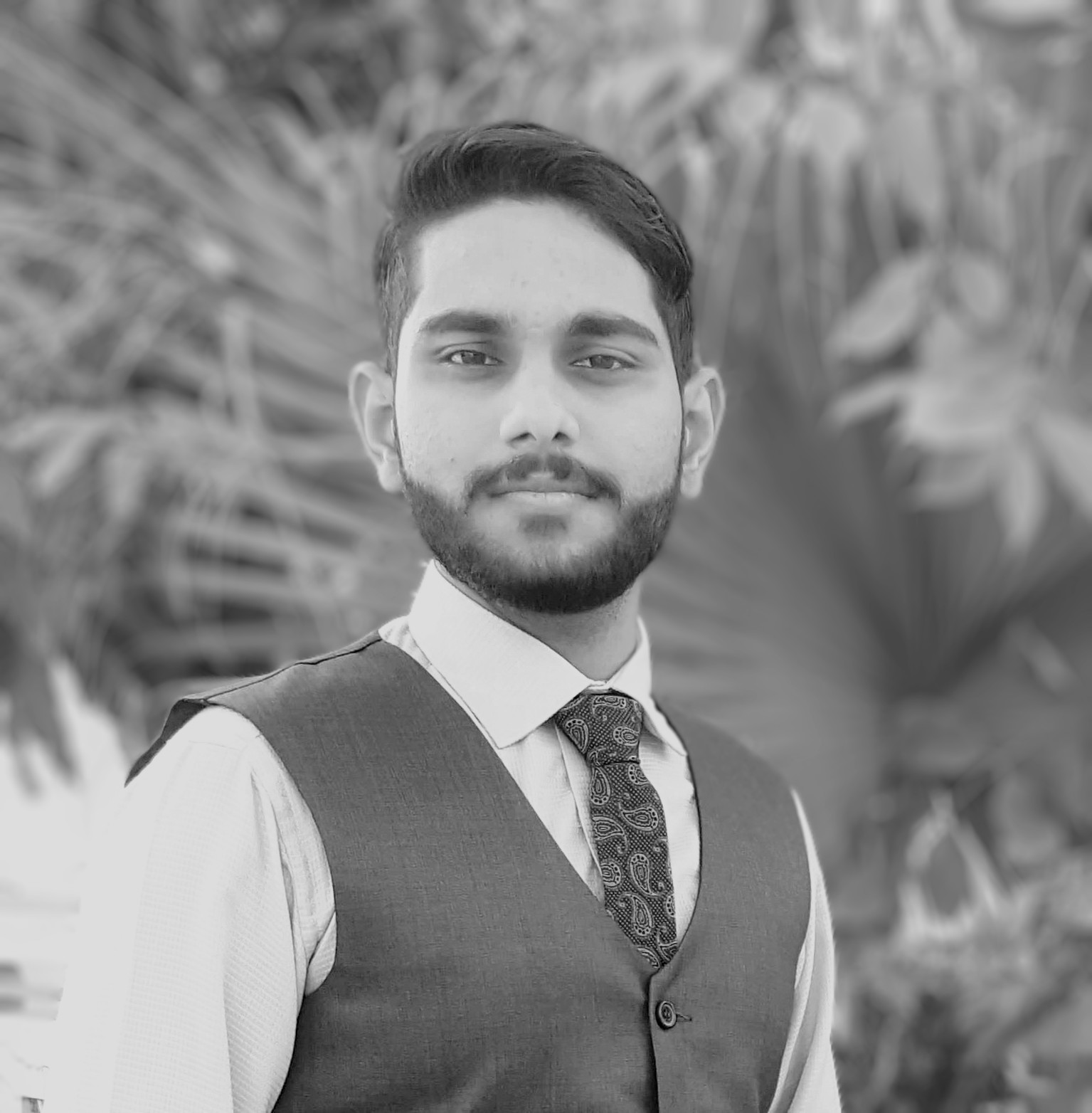
Who I am, what I'm working on, and the skills behind it.
I'm a software engineering graduate with a deep interest in AI, machine learning, and intelligent systems. Over the past two years I've worked across agricultural and medical computer vision, turning research questions into datasets, models, and reproducible experiments.
Right now, I'm focused on explainable AI (XAI): learning how to interpret and build trust in machine learning models, work that matters as much for deploying AI responsibly as for advancing the research itself. Furthermore, I recently published PakGroundnut-4V, a peanut classification dataset I designed and collected from the ground up, on Zenodo.
I care about AI that's actually safe and reliable to deploy, not just accurate on a benchmark, whether that's a research model or a system running in production. Moving from which model scores highest to which model can we trust under real conditions is the thread running through both my research work.
My goal is a Master's in AI, machine learning, or data science, followed by a career that combines research depth with the ability to build and ship reliable, practical AI systems, whether in a research lab or in industry.
Publications, datasets, and tools built as part of my research work.
This study asks which pretraining approach is actually safest to deploy for chest X-ray diagnosis when labeled data is scarce and the data shifts, rather than just which one scores highest.
After comparing EfficientNet-B0, EfficientNet-B4 and ConvNeXt-Base with ResNet-50, I improved a ResNet-50 transfer-learning model with augmentation, a OneCycleLR schedule, and a weighted loss for class imbalance.
A review of deep learning, machine learning, and hybrid approaches across four core tasks in peanut agriculture: variety classification, maturity assessment, disease detection, and pest recognition.
A large-scale, multi-condition image and phenotypic dataset built to support robust computer vision research in agricultural variety classification. Designed and collected independently, with images gathered across two sites in Punjab, Pakistan: Chakwal and Sargodha.
| Varieties | Attock-2019 (2,240 images), Fakhr-e-Chakwal (2,288), Parachinaar (2,192), Fakhr-e-Attock (2,224); verified through peer-reviewed literature and direct consultation with the Barani Agricultural Research Institute (BARI), Chakwal |
| Scale | 8,944 images (320×320 px), fixed 90° overhead angle, across 5 backgrounds, 4 lighting conditions, and 5 quantity levels (1 to 5 peanuts per frame) |
| Negative class | 60 background-only images, kept separate from the classification folders to support out-of-distribution and future object-detection research |
| Morphometric samples | 80 pod photographs and measurements (20 per variety), taken with a digital Vernier caliper (0.01mm precision) and digital scale (0.1g precision) |
| Splits | Standard stratified split (6,259 / 1,340 / 1,345 train/val/test), plus dedicated cross-background and cross-lighting splits for domain-generalization research |
| Baseline | Five models over five seeds. ViT-B/16 reaches a mean macro-F1 of 0.977 (best seed 0.982) on the standard split, but drops by 22.3% on unseen backgrounds and 17.4% on unseen lighting |
| Documentation | README, LICENSE, CITATION.cff, and DATA_CARD.md, with full per-image metadata |
| License | CC BY 4.0 |
| Access | Zenodo (DOI: 10.5281/zenodo.22014996), Kaggle, GitHub |
| Authors | Kashif Mahmood, Dr. Muhammad Ramzan, Khizar Hayat (farm owner who supplied physical specimens) |
A full-stack local web application built to solve the bottleneck behind preparing PakGroundnut-4V: batch-cropping composite dataset photographs into individual, ML-ready images.
| Stack | Python 3.11, FastAPI, Pillow, React 18, Vite |
| Core feature | Custom HTML5 canvas multi-region crop editor with drag, resize, and one-click batch-apply across a folder |
| Engineering | Chunked uploads, streaming ZIP export, disk-cached thumbnails — processes multi-gigabyte datasets with no size limit |
Research and applied data science roles.
I built a strong foundation in Programming Fundamentals, Object-Oriented Programming, Data Structures and Algorithms, Statistics, Linear Algebra, and Database Management Systems, alongside hands-on experience with essential tools. These fundamentals gave me the confidence to work with Machine Learning and Deep Learning models. In my fourth semester, I independently began exploring Data Science, the starting point of my path into AI.
I completed my Intermediate studies in Computer Science with strong academic performance, building a foundation in programming, computational theory, and problem-solving. This period sparked a genuine interest in technology that pushed me to explore concepts beyond the syllabus on my own, refining my skills and deepening my understanding of the technical landscape. That early curiosity gave me clear direction toward a career built around technology and innovation.
A mix of research systems, applied data science, and full-stack builds.
Academic honors, leadership, seminars, sports, and certifications — filter by category.
Outside of research, I take on freelance and contract work in data preprocessing, ML model development, dashboards, and CI/CD-automated pipelines.
Open to research collaborations, graduate supervision conversations, and select freelance work.